Facebook Pixel
Address: Cra 14 # 18A-14, San Francisco, Lorica - Córdoba - Colombia

Buyer's guide

How to choose a software development company in Medellín

To choose a software development company in Medellín, skip the "best of" lists and check five things you can verify: whether it understands your problem before giving you a price, whether it delivers a written scope with phases and deliverables, whether it tells you when building is not worth it, whose name the code and cloud accounts end up under, and who maintains the system after delivery. A vendor that answers those five in writing is worth more than one with a better spot in a ranking.

This guide gives you the criteria and the exact questions for the first meeting, even if you do not end up choosing us.

The starting point

Why "the best companies" is a bad place to start

Search for software companies in Medellín and the first results are rarely companies: they are ranking-style lists. Some are written by one of the listed companies, which puts itself first. Others are published by directories that charge for placement, so the order reflects who paid, not who does better work.

Neither is dishonest by itself. The problem is that the order was not built around your project. A vendor that is excellent for a fintech can be a poor fit for an operation with people in the field, and the ranking does not tell them apart. Use those lists to pick three or four names, add one that is not on them, and run all of them through the same criteria.

Criteria

Seven criteria that separate a good vendor from a bad one

None of them is technical. All can be checked in a conversation, and almost all leave a written trail, which is what matters when something goes wrong.

/01

It understands the problem before quoting

Ask about your operation, not your idea. A good vendor wants to talk to the people who run the process today. A price given on the first call, before talking to anyone on your team, is a bet, and you pay the difference.

/02

It writes the scope before building

The scope says what will be built and, more importantly, what will not: phases with deliverables, a budget per phase, the risks the vendor already sees and acceptance criteria. Without it, the argument arrives after you have paid half.

/03

It tells you when not to build

A vendor that never says "an existing tool does this for a fraction of the cost" is selling hours, not solving problems. Custom software pays off when your process is your edge or no tool covers it without bending it.

/04

It is clear about who owns the code and the accounts

Ask whose name the repository, the cloud account and the app store accounts will be under. If everything stays with the vendor, the price you negotiated is the entry fee to a dependency.

/05

It has a written change procedure

Every project hits "while we are at it, let us add inventory". The right answer is a separate written quote before the work, and you decide whether it goes in now, later or never.

/06

It explains what happens after delivery

A delivered system is still alive: servers, security patches, app store changes and bugs that only show up in real use. Ask how long the warranty is, what it covers and how support is billed.

/07

It answers for team continuity

Ask who will work on your project, whether they are employees or subcontractors, and what happens if one leaves. It is the question that makes resellers of other people’s work most uncomfortable.

The first meeting

The exact questions for the first meeting

Ask them word for word to every vendor you are evaluating, and note who answers with a document and who answers with adjectives.

  • Who on my team do you need to talk to before giving me a price, and how much of their time?
  • What document do I receive before signing, and what exactly does it include?
  • If you find that an existing tool solves my case, would you tell me? Has it happened?
  • Whose name will the code repository and the cloud account be under when the project ends?
  • What happens if I ask for something outside the scope midway? Walk me through the procedure.
  • Who will work on my project, are they your employees, and what happens if one quits?
  • How long is the warranty, what does it cover, and what does support cost afterwards?
  • How will I see progress? How often can I test something that works, not a presentation?
  • Show me two projects you can name, with their status today. Can I talk to one of those clients?
  • Which project went wrong, and what did you change afterwards?

Red flags

Red flags, and why each one matters

A price on the first call

Nobody can know what it costs to build something they do not understand yet. That number is usually a low hook corrected later with extra charges.

They talk about technology, not your process

If the conversation revolves around tool names instead of how an order moves through your company today, you are talking to someone who wants to build, not understand.

"Everything included" without a written scope

It means the vendor will decide what "everything" was on the day it suits them. A scope you cannot print does not exist.

You cannot talk to a previous client

Some contracts carry legitimate confidentiality, and that gets said. But if none of their clients can take your call, ask yourself why.

Local presence

Does the vendor need an office in Medellín?

Sometimes, and not always for the reasons people assume. Presence matters when discovery happens on a plant floor, when the operation lives in the field, when hardware must be installed or when a contract requires a local address. It matters little when the project is split into phases that each end in something you can open, test and approve: there, control comes from the written scope and the code in your name, not from the vendor’s address.

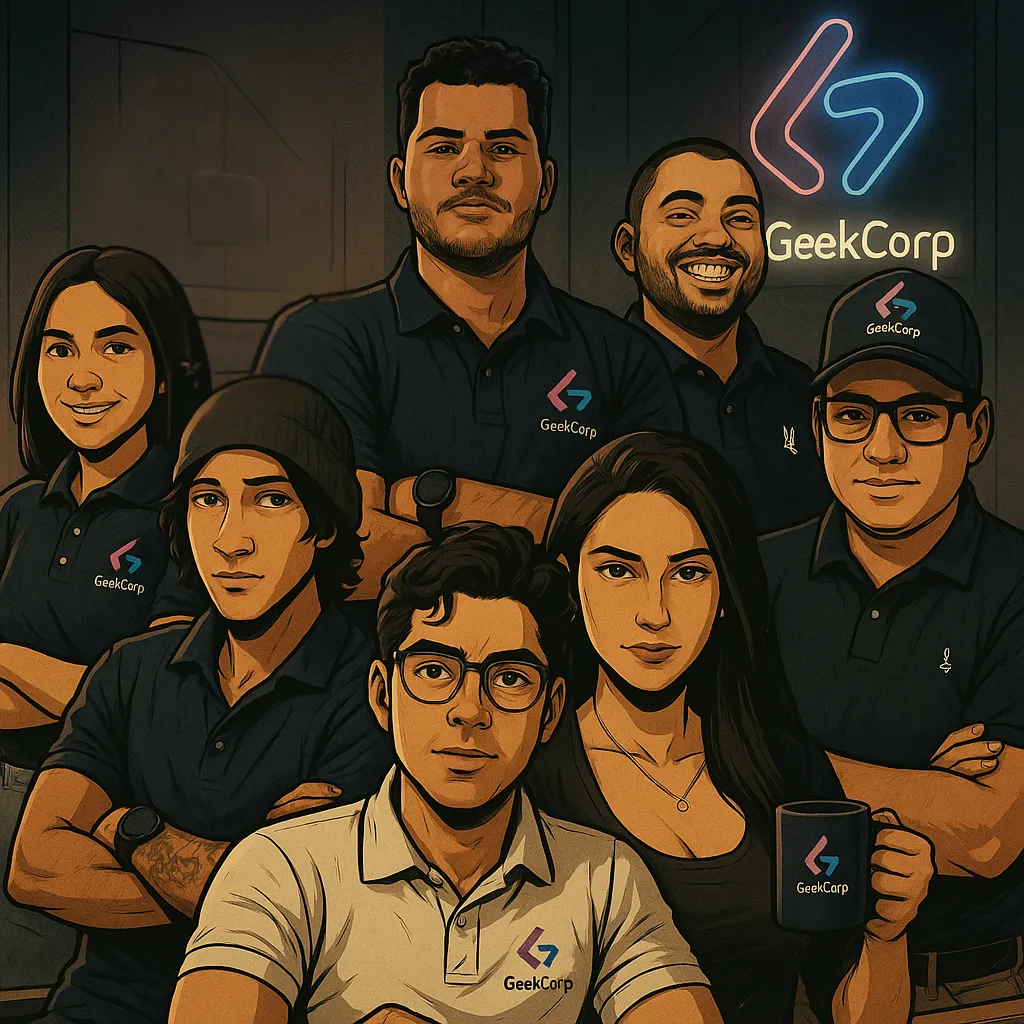
We say it plainly because it applies to us: GeekCorp has no office in Medellín. Our head office is in Córdoba, we have presence in Montería and Barranquilla, and we serve Medellín and the rest of the country remotely, traveling when the project requires it. If you need someone on your floor every week, hire a local vendor. That is a legitimate reason not to hire us.
Cases

What a large project looks like when the scope is written

Op-Tra, the public transport system of Montería, combines real-time fleet monitoring, on-board validators and separate apps for riders and operators. It took twelve months under agreement 1367-2024 of Colombia’s Ministry of ICT with the National University of Colombia, and it is in operation. A twelve-month project with hardware on the street only survives if the scope is split into phases with acceptance criteria.

At the other end, Navas, a climate-control maintenance company, moved its service orders from paper to a web and mobile app in two months. Same method, two very different sizes. When a vendor only shows you projects of one size, ask about the other.

FAQ

Frequently asked questions

What is the best software development company in Medellín?

There is no best one in general, and any list that says so is selling a spot or its own. There is a best one for your project, and finding it means putting three or four candidates through the same criteria: they understand the problem before quoting, deliver the scope in writing, leave the code and accounts in your name and say who maintains the system after delivery.

Should I only hire companies with an office in Medellín?

It depends on the project. Physical presence matters when discovery happens on a plant floor, when the operation lives in the field, when hardware must be installed or when a contract requires a local address. It matters little when the work is split into phases that end in something you open, test and approve. GeekCorp has no office in Medellín: our head office is in Córdoba, we have presence in Montería and Barranquilla, and we serve Medellín remotely, traveling when the project requires it.

How much does custom software cost in Colombia?

GeekCorp projects range from 5 to 500 million Colombian pesos. Where yours falls depends on scope, integrations and platforms, so any tighter figure given before understanding your operation would be invented. Our pricing guide explains what moves the price.

Is Colombia a good place for nearshore software development?

For companies in the United States and Canada, Colombia shares or nearly shares business hours, which makes daily collaboration practical, and it has an established software industry. Time zone and cost are only the starting point: the same criteria in this guide apply to any vendor, wherever it is.

How do I compare two quotes that look the same?

Compare them line by line against the same written scope, never by total. Check what each one excludes, whether integrations are named one by one, how many user roles are covered, whether design and testing are included, and what warranty, support and cloud cost in the first year.

What does GeekCorp’s first consultation include?

The first consultation is free: we talk to whoever runs the process today, understand the problem and tell you what we would do. If there is a fit, the next step is the scope document with phases, deliverables and a budget per phase. If an existing tool solves your case, we tell you in that first conversation.

Contact

Tell us what you want to solve and we will tell you if we are a fit

The first consultation is free: we understand the problem and tell you what we would do. If there is a fit, the next step is the scope document with phases, deliverables and budget.

Equipo de GeekCorp - Contacto

Contact Information

CONTACT US

Tell us what you want to solve

WhatsAppContact us on WhatsApp!